
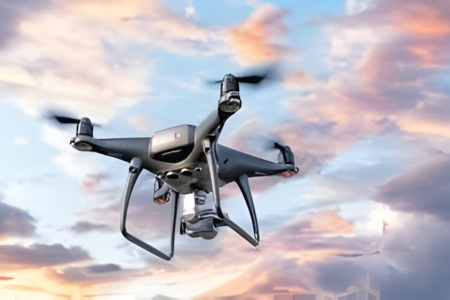
Drone technology has evolved from a niche hobbyist pursuit into a transformative force reshaping industries, creativity, and our very perspective of the world. It represents the most accessible and potent convergence of aerodynamics, robotics, computer science, and telecommunications. Today's drones are not just flying cameras; they are data-gathering platforms, autonomous systems, and tools for innovation that sit at the cutting edge of technology.
Core Technology Breakdown: What Makes a Drone Intelligent?
1. The Hardware Stack: More Than Just Motors
Frame & Propulsion: Materials (carbon fiber for strength, lightweight composites), motor types (brushed vs. brushless for power & efficiency), and propeller design for thrust and stability.
Flight Controller (The "Brain"): An onboard computer running complex firmware (like Betaflight, iNAV, ArduPilot). It processes data from all sensors to stabilize the aircraft.
Sensor Fusion (The "Senses"):
- Gyroscope & Accelerometer: Detect orientation and movement.
- Magnetometer: Acts as a digital compass.
- Barometer: Measures altitude via air pressure.
- GPS/GNSS: Provides location, enables "hold position," and autonomous missions.
- Vision Systems & LiDAR: Advanced drones use downward-facing cameras for optical flow (hovering without GPS) and obstacle detection. LiDAR creates precise 3D maps.
Communication Systems:
- Radio Control (RC Link): 2.4GHz for pilot control. Protocols like ELRS, Crossfire, or TBS offer ultra-long-range, low-latency links.
- FPV Video Link: Transmits the live, first-person view from the drone's camera. Analog (low latency) vs. Digital (HD quality) systems like DJI O3 or Walksnail.
- Telemetry: Two-way data link sending battery status, GPS coordinates, and diagnostics to the pilot's ground station.
2. The Software & Intelligence Layer
Autonomous Flight & Mission Planning: Software like Mission Planner or DroneDeploy lets you plot waypoint missions on a map. The drone will automatically take off, fly the route, capture data, and return.
Computer Vision & AI: Modern drones can track subjects, recognize objects, avoid obstacles in real-time, and even conduct automated inspections by identifying cracks or defects.
Data Processing & Photogrammetry: The real magic happens after the flight. Specialized software (e.g., Pix4D, Agisoft Metashape, DroneDeploy) stitches hundreds of photos into 2D orthomosaics, 3D models, and digital elevation maps with centimeter accuracy.
Application Ecosystems: From Recreation to Revolution
A. Creative & Recreational
- Cinematography: Revolutionizing film and real estate with dynamic, sweeping shots.
- FPV Racing & Freestyle: A high-speed, immersive sport where pilots navigate courses wearing goggles, pushing technical and physical limits.
B. Commercial & Industrial (Drone-as-a-Service)
- Surveying & Mapping: Creating accurate topographical maps for construction, mining, and land management faster and cheaper than traditional methods.
- Precision Agriculture: Multispectral sensors monitor crop health, optimize water/fertilizer use (NDVI mapping), and increase yields.
- Infrastructure Inspection: Safely inspecting cell towers, wind turbines, power lines, bridges, and solar farms, reducing risk and cost.
- Public Safety & Disaster Response: Search and rescue, firefighting hotspot identification, and post-disaster damage assessment.
- Delivery & Logistics: Pioneered by companies like Zipline for medical supply delivery, now expanding to last-mile commercial logistics.
C. Scientific & Environmental
- Conservation: Monitoring wildlife populations, tracking deforestation, and combating poaching.
- Archaeology: Discovering and mapping historical sites using thermal and LiDAR sensors.
- Atmospheric Research: Sampling air quality and weather patterns.
The Critical Layer: Regulations & Safety
- Part 107 (USA) / Equivalent Worldwide: The commercial drone pilot's license. Understanding airspace classifications (controlled vs. uncontrolled), altitude limits, VLOS (Visual Line of Sight) rules, and no-fly zones is non-negotiable.
- Remote ID: The emerging "digital license plate" for drones, enabling identification and security.
- Privacy & Ethics: Responsible piloting involves understanding privacy laws and the ethical use of surveillance technology.
Learning Pathways & Career Opportunities
Why Deep-Dive into Drone Tech?
This field offers a direct route to high-demand, future-proof skills.
| Pathway | Skills Developed | Potential Career/Role |
|---|---|---|
| Pilot/Operator | Flight proficiency, regulations, mission planning | Surveyor, Inspector, Cinematographer, Mapping Specialist |
| Data Analyst | GIS software, photogrammetry, data interpretation | GIS Analyst, Agricultural Analyst, Mapping Technician |
| Technician/Builder | Electronics, soldering, firmware configuration, repair | Drone Technician, FPV Build Consultant, R&D Support |
| Developer/Engineer | Coding (Python, C++), ROS, AI/Computer Vision | Autonomous Systems Engineer, UAV Software Developer |
Getting Started: Your Tech Journey Map
Phase 1: Learn to Fly & The Law
- Start with a sub-250g beginner drone (like a DJI Mini series) to practice basics.
- Study for and pass your local certification (e.g., FAA Part 107) immediately. This frames your entire learning with professional standards.
Phase 2: Choose Your Specialization & Build
- For FPV/Aerobatics: Buy a tiny whoop kit (drone, goggles, radio) for indoor practice, then progress to a 5-inch freestyle drone build.
- For Mapping/Photography: Invest in a higher-end consumer drone with a mechanical shutter and RTK capability for survey-grade accuracy.
- For Autonomy/Robotics: Start with a programmable drone platform like the Holybro X500 running PX4/ArduPilot, and learn to code missions in Mission Planner.
Phase 3: Master the Data & Innovate
- Learn a photogrammetry software pipeline.
- Experiment with Python scripts to analyze geospatial data or automate tasks.
- Integrate additional sensors (multispectral, thermal) for specialized projects.
The Future Horizon: What's Next?
- Advanced AI & Swarm Technology: Drones collaborating in intelligent swarms for complex tasks.
- BVLOS (Beyond Visual Line of Sight) Operations: Enabled by better sense-and-avoid systems, unlocking long-range inspections and deliveries.
- Urban Air Mobility (UAM): The foundation for the coming ecosystem of passenger and cargo eVTOL (electric Vertical Take-Off and Landing) aircraft.
Conclusion: Your Toolbox for the Aerial Age
Drone technology is a gateway discipline. It doesn't just teach you how to fly; it teaches you how to see, analyze, and interact with the world from a new dimension. Whether your goal is to create stunning art, optimize a farm, build the next delivery network, or simply understand the fusion of hardware and software, mastering drone technology positions you at the forefront of the 21st century.
Ready to Code Your Flight Path? Explore our curated sections on [Professional Drone Kits], [FPV Build Bundles], [Mapping Software Tutorials], and [Certification Prep Guides].
| Size | Small, Medium, Large & Extra Large |
| Color | Read, Blue, Green & Black |
| Length | 35 cm |
| Fabric | Cotton, Silk & Synthetic |
| Warranty | 6 Months |
Cobus Bester March 20, 2025
Really happy with this print. The colors are great, and the paper quality is very good.
Cobus Bester March 12, 2025
Really happy with this print. The colors are great, and the paper quality is very good.
Cobus Bester March 11, 2025
Really happy with this print. The colors are great, and the paper quality is very good.