
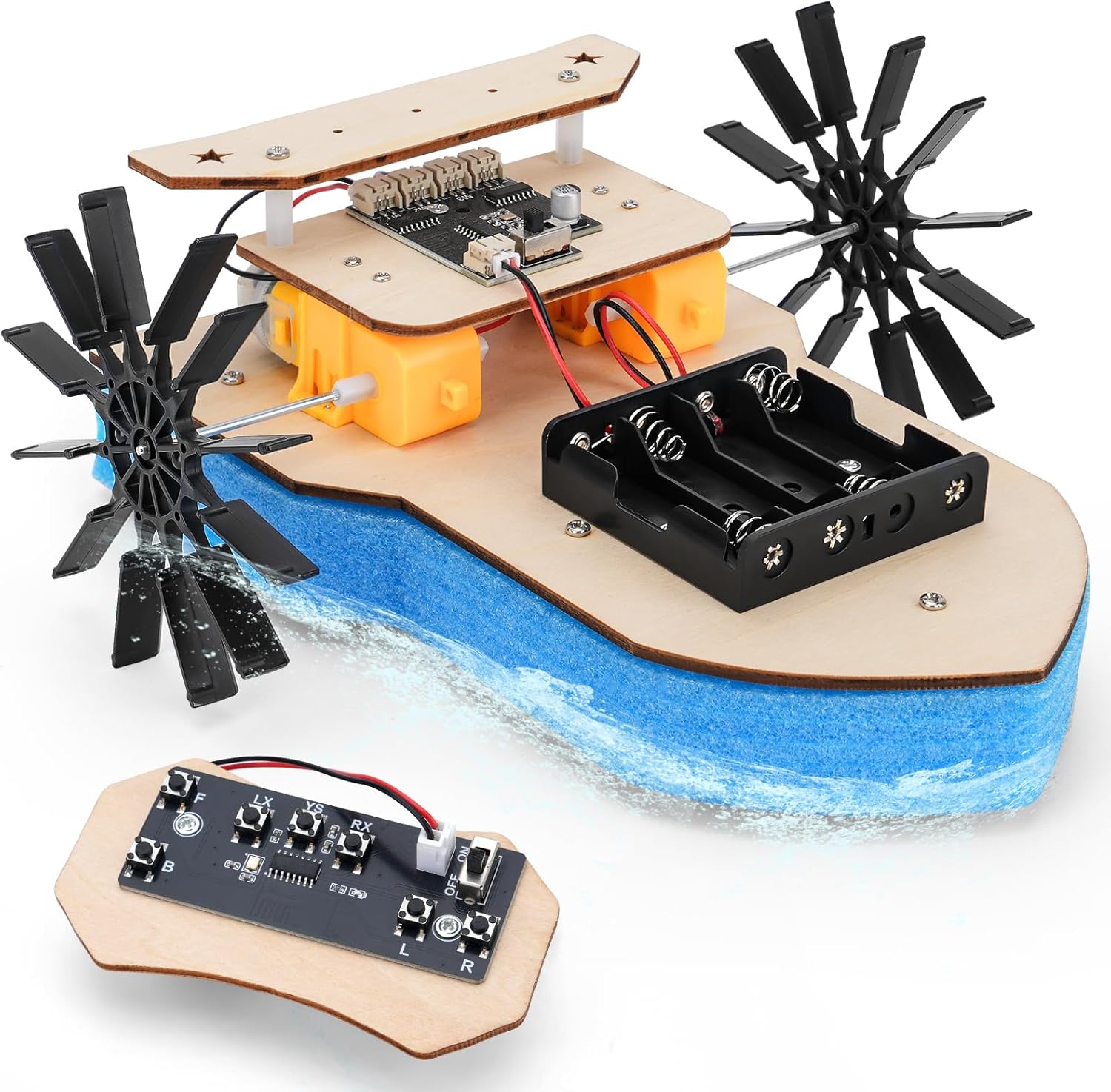
RC Ship Modeling is not just a hobby; it is a blend of craftsmanship, engineering, and maritime passion. Unlike simple remote-controlled boats, ship modeling focuses on realism, balance, and precise control on water. Every vessel relies on careful design, waterproof construction, and the modeler’s skill to navigate currents and waves. The objective is both aesthetic and functional: to recreate authentic ships while achieving smooth, stable performance. The result is a captivating experience—detailed, graceful, and deeply rewarding.
The Three Pillars of the Craft
1. The Research Phase: Building the Story
Before a single piece is cut, the true modeler becomes a historian and detective.
- Choosing Your Subject: A WWII battleship, a 19th-century clipper, a modern container ship, or a personal yacht. This choice dictates everything that follows.
- Plans & Documentation: Sourcing original blueprints, period photographs, and technical manuals. This pursuit of accuracy is a hobby in itself.
- Scale Decision: 1:50, 1:72, 1:100—the scale determines size, detail level, and required workspace. Larger scales allow for breathtaking interior detail.
2. The Build Phase: The Art of Creation
This is where the vision becomes tangible. Building methods vary by ambition and skill.
A. Construction Techniques:
- Plank-on-Frame (The Traditional Master Method): Building a miniature wooden skeleton (frames) and meticulously hand-planking the hull with thin strips of wood. This is shipbuilding in miniature, requiring the highest skill and yielding the most authentic result.
- Bread-and-Butter (Solid Hull): Gluing layers of wood together, then carving and sanding them to the hull's shape. A robust method good for beginners and complex hull forms.
- Fiberglass & Composite Kits: For mass-produced accuracy. A detailed fiberglass hull comes pre-formed; the builder adds decks, superstructure, and details.
- 3D Printing (The Modern Revolution): Enables the creation of impossibly complex parts—intricate railings, gun turrets, propellers—with perfect repeatability. Often used to complement traditional builds.
B. The Devil in the Details:
This is what separates a model from a masterpiece.
- Fittings: Sourcing or fabricating tiny, scale-accurate anchors, cleats, bollards, lifeboats, and davits from brass, wood, or photochemical etch (P.E.).
- Weathering & Realism: Using specialized paints, washes, and pigments to simulate rust, soot, wood grain, and waterline stains. A perfectly "clean" model often looks less real than a carefully weathered one.
- Rigging (for Sail Ships): The pinnacle of challenge. Using specialized ropes and threads to recreate the complex web of shrouds, stays, and running rigging with authentic knots and blocks.
3. The Sail Phase: The Engineering Challenge
Making it float and move realistically is a deep engineering discipline.
A. Waterproofing & Ballast:
- The hull must be absolutely watertight. Multiple coats of sealant, epoxy, and careful fitting are essential.
- Ballast is critical. Weight (usually lead) must be added low in the hull to achieve the correct waterline and ensure stability. The Center of Gravity (CG) must be far below the Center of Lateral Resistance (CLR).
B. The RC Drive System:
- Propulsion: Brushed or brushless marine-grade motors, connected via a shaft, coupling, and stern tube with a grease nipple to prevent leaks. The propeller (screw) is chosen for scale appearance and thrust.
- Steering: A waterproof servo connected to the rudder(s) via pushrods.
-
Specialized Functions:
- Sail Control: For yachts, servos manage the sheets (lines controlling sails).
- Multifunction Models: Warships may have rotating turrets, functioning lights, sound modules for gunfire and engines, and even smoke generators.
- Dynamic Positioning: Advanced models use multiple thrusters and GPS to hold station automatically.
C. The "Pond Side" Etiquette & Joy:
Sailing is a social, serene event. Enthusiasts gather at calm ponds or lakes. The joy comes from the scale-speed realism, the graceful maneuver, and the shared appreciation for each other's work. A perfect pass is slow, steady, and true.
Categories of RC Ship Modeling
| Category | Focus | Challenge | Key Appeal |
|---|---|---|---|
| Static Display Models | Ultimate visual accuracy and detail. Not designed to float. | Historical research, micro-detailing, painting, and weathering. | Creating a museum-quality piece of art. |
| Scale Powered Vessels | Functional replicas of real ships. | Integrating complex running gear into a scale hull. Balance between aesthetics and function. | The spectacle of a realistic ship operating on the water. |
| Sailboats (Yachts & Historical) | The science and art of sailing in miniature. | Rigging, sail trim, and reading wind/water conditions. No "motor reset" button. | The pure, silent, and strategic challenge of harnessing the wind. |
| Commercial & Pleasure Craft | Tugs, trawlers, speedboats, modern yachts. | Maneuverability, towing (for tugs), and creating realistic water effects (wakes). | High functionality and often rugged, "working boat" character. |
The Deep Rewards: Why This Hobby Captivates for a Lifetime
- A Portal to History: You don't just build the USS Constitution; you learn its history, its role, and the lives of those who sailed it.
- Multidisciplinary Mastery: It seamlessly combines woodworking, electrical engineering, hydrodynamics, painting, history, and radio technology.
- The Meditative Process: The countless hours of focused, detailed work are a form of active meditation, producing immense pride upon completion.
- The Intellectual Community: Clubs and online forums are filled with experts who generously share decades of knowledge on obscure techniques or historical facts.
Getting Started: Your Voyage Begins Here
Phase 1: Dip Your Toes (The Ready-to-Run or Simple Kit)
- Recommendation: A pre-built, pre-painted ABS hull model (like from Oceaner or DFE). Or, a simple "balsa wood on frame" beginner's kit of a small dinghy.
- Goal: Learn basic RC boat operation, understand balance and trimming, without the fear of ruining 500 hours of work.
Phase 2: First Build (The Kit Build)
- Recommendation: A high-quality fiberglass hull kit from a brand like Billings Boats, Dumas, or Occre. Choose a subject that inspires you (a tugboat is an excellent first major project).
- Invest in Good Tools: Precision knife, miniature clamps, a good pin vise, quality sandpaper, and CA glue.
- Skills Learned: Kit interpretation, basic electronics installation, waterproofing, and simple painting.
Phase 3: The Journey to Mastery (Plank-on-Frame or Scratch Build)
- The Pinnacle: Purchasing a set of detailed plans and sourcing your own wood (basswood, cherry, walnut) and fittings.
- This is a multi-year project for many. The process itself is the primary reward.
Essential Resources & Community
- Clubs: The Model Ship World forum and local Society of Model Marine Engineers (SMME) chapters are invaluable.
- Specialty Suppliers: Companies like Cornwall Model Boats, Ages of Sail, and Bluejacket Shipcrafters are institutions.
- Magazines: Model Boats (UK) and Nautical Research Journal.
Conclusion: More Than a Model, a Legacy
RC ship modeling is a counter-cultural act of creation in a world of consumption and speed. It rewards patience, precision, and passion with an object of enduring beauty and technical intrigue. The final product is not just a boat; it is a time capsule of your skill and dedication, a piece of history reborn, and a ticket to a peaceful, thoughtful community. It is, quite simply, the art of making history float.
Ready to Lay Your Keel? Set sail from our harbor of resources: [Curated Beginner Kits], [Master Tool List], [Electronics Guides], and [Link to the Model Ship World Community]. Your masterpiece awaits.
| Size | Small, Medium, Large & Extra Large |
| Color | Read, Blue, Green & Black |
| Length | 35 cm |
| Fabric | Cotton, Silk & Synthetic |
| Warranty | 6 Months |
Cobus Bester March 20, 2025
Really happy with this print. The colors are great, and the paper quality is very good.
Cobus Bester March 12, 2025
Really happy with this print. The colors are great, and the paper quality is very good.
Cobus Bester March 11, 2025
Really happy with this print. The colors are great, and the paper quality is very good.